 Natasha Orme
My dad got married this summer which was amazing. And so we decided to make the most of the opportunity of being abroad and embarked on an 8-day Scandinavian tour to visit some of the most beautiful cities in Europe. Having never visited Scandinavia before, we were super excited!
Scandinavia stop #1: Copenhagen
If you’re looking for my favourite Copenhagen attractions, take a look at 6 Things You Need to Try in Copenhagen
Copenhagen is a beautiful city with a rich culture and one that is often dismissed when it comes to travelling Europe. Generally speaking, people favour the hotter, more affordable destinations in Spain and Portugal. So this summer I decided to take on the challenge of touring Scandinavia, and my first stop was Copenhagen.

Getting to Copenhagen
The 7.5-hour journey began in Fallingbostel, a German town I grew up in and where my Dad now lives. Thankfully, my dad was able to drive us to the station at Soltau for our first train, and once at Bucholz, we changed trains to head to Hamburg.
Hamburg to Copenhagen is a direct 5-hour train that navigates not just the German and Danish countrysides but also the Femer Bælt, a stretch of water between the two. Unbeknownst to me at the time, the train was due to embark on its own ferry at Puttgarden and carry us across the water to Rødbyhavn.
I always find travel more stressful when English isn’t widely used, but it’s Scandinavia’s second language which meant we didn’t miss the announcement of a technical fault on the line. Instead of boarding the ferry on the train, we disembarked at Puttgarden and boarded a ferry to Rødbyhavn where we needed another train to take us the rest of the way.
Exploring Copenhagen: Stroget, the ultimate shopping district.
Our first glimpse of Scandinavia as we weaved our way through the streets to our hotel had us buzzing with excitement. Having dropped our suitcases off at the hotel, we ate in a cute little pizzeria over the road before deciding to explore the city
As with all cities we visit, we couldn’t resist stopping by the Hard Rock Café on Rådhuspladsen, which gave us a great opportunity to explore Strøget – one of the longest pedestrianised streets in Europe and the ultimate shopping district in Copenhagen. After a leisurely cocktail at the Hard Rock Café and a T-shirt purchase from their Hard Rock Shop, we took a closer look at the City Hall and the entrance to Tivoli Gardens before deciding to call it a night and come up with an action plan in the morning.

Our Copenhagen hotel: Wakeup Copenhagen
We stayed at Wakeup Copenhagen on Borgergade and it was a great little hotel; nicely furnished, clean, modern and in the perfect location. If you want to travel to the city on a budget, then I would highly recommend it. The staff were really friendly and I felt like we got a good deal.
Quick note: the room was very compact, something we found to be common across Scandinavia as a whole.

Our tour of the city
We started our day at MJ Coffee before heading down to the harbour. There were a few different boat tour companies to choose from, and we went with Netto Boats. We hopped aboard and enjoyed an amazing tour of the city’s waterways with insightful anecdotes from our multilingual tour guide. From the boat, we got to see the Stock Exchange, the Little Mermaid, the Black Diamond Library, the Cathedral and the Royal Family’s House they use when travelling by boat.
I would definitely recommend seeing the city this way!

The boat tour was a great way to see the iconic landmarks of Copenhagen and also provided some great inspiration. Anyone who knows me knows I’m a huge book lover, so it felt only right to visit the Black Diamond Library (officially known as the Royal Library). It was a 20-minute walk from the harbour to the Library and was lovely to wander the streets of the city.
The Library itself was grand and imposing, sitting right on the water’s edge. Inside was a cafe and outsized were comfy, over-sized deckchairs, the perfect spot for reading a book or two…

Every beer enthusiast’s must-do: A trip to the Carlsberg Brewery
After the library, we headed back into the city centre to catch the bus to the Carlsberg factory. The free bus was on Vesterbrogade right outside the Tivoli Gardens main entrance and took us right up to the factory gates (we bought our entrance ticket on board, although I’d recommend booking in advance to secure your spot).
The tour granted access to the incredibly old world of the Carlsberg brewery. The site was amazing purely because of its age and how it felt like we’d been transported back in time. The tour was self-guided and featured a few different stops, including the world’s largest collection of bottled beer.

Once we’d toured the factory, we enjoyed a horse-drawn carriage ride around the rest of the site, followed by some food from the grill. We then ventured upstairs to the bar, claimed our two free drinks and watched the bottling plant before heading back to the bus.
Entering the wonderland of Tivoli Gardens
That evening, we visited Tivoli Gardens. Opened in 1843, Tivoli Gardens is the second oldest amusement park in the world. Labelled as an amusement park and pleasure gardens, Tivoli is a unique place that I would definitely recommend a visit.

We did everything from playing carnival games to drinking slush puppies and watching the world go by. The Gardens were a constant hubbub with so much to see and do. We watched some wild birds wandering around the park, visited the aquarium and admired the eccentric style of the buildings.
Scandinavia stop #2: Stockholm
If you want some budget-friendly activities, take a look at this post: 8 Things to do in Stockholm on a Budget
The following day we said goodbye to Copenhagen and boarded a train for our next destination: Stockholm.
Copenhagen to Stockholm by train
Getting to Stockholm was almost as arduous as travelling to Copenhagen. It was a pleasant enough journey, and the Scandinavian public transport systems are amazing, but there were quite a few connections we couldn’t afford to miss.
First we caught a train from Copenhagen City Station to Copenhagen Airport, changed and then boarded a train from Copenhagen Airport to Malmö where we changed trains again and our passports were checked by police as part of border control.

Our Stockholm hotel
I’ll always say Scandinavia isn’t as expensive as many people think, except we actually really struggled to find a reaonably priced hotel in Stockholm that wasn’t too far out. The difficulty is the city is spread out over 14 islands so it’s almost impossible to be central. I’d recommend looking at what you plan to do and choose a hotel location based on that. We ended up spending time on multiple different islands. It’s one of the most spread-out cities I’ve ever been to.
Because of this, hotel choice for our budget was somewhat limited. We did manage to find what I would call a Scandinavian version of a Premier Inn, but it came with one drawback: there were no windows. (Oh, and it was a good 15/20 minute walk to the nearest tube station.)
For me, this room was too dark and dingy (and it didn’t help that the walls were painted black and purple).

Walking the city
We soon discovered how spread out Stockholm was after we spent our first evening wandering from one island to the next.
We headed over to the Hard Rock Café for dinner, bought another T-shirt for the collection and headed down Drottninggatan, the main pedestrian street where some of the most popular bars, restaurants and shops can be found.
Our wanderings led us over the bridge and back towards Kungsholmen, the area where we were staying.


En route, we came across City Hall, a rectangular-shaped building with an open courtyard that’s free to explore. It also boasts incredible views over the Riddarfjärden.

Where Stockholm is so spread out, it quickly became obvious we needed a travel card for the metro system. So, armed with our travel card, we spent our first day wandering through the streets of Gamla Stan – the Old Town of Stockholm on its own little island.

Here we visited the Royal Palace, the Houses of Parliament and the Nobel Prize Museum in Stortorget. Stortorget was easily my favourite spot; the buildings were so amazingly colourful and was such an iconic to visit. There were so many cute little cafes dotted all around the square which made people-watching a lot of fun.


Interesting landmarks to visit in Stockholm
The remainder of our day was spent in Djurgården, a district of Östermalm. Here we visited the Vasa Museum where an old wooden warship (the Vasa) has been restored and is on full display. The ship was amazing and the museum is built around it, with five floors of relics, artefacts and the bones of the sailors who were on board.


Our final day in Stockholm was spent exploring the malls in and around Regeringsgatan and Hamngatan before we went over to Kungsträdgården which was a great little hubbub of activity. We enjoyed the relaxed atmosphere in Kungsträdgården before wandering back over the bridge to Gamla Stan for pizza at Rodolfino.

The afternoon was spent shopping on Drottninggatan which included a rather expensive coffee and cake at Café Belmondo before taking a relaxing wander back to our hotel. And after some pretty intense travelling, we decided on an easy evening at O’Leary’s sports bar opposite our hotel.
Scandinavia stop #3: Oslo
For a more detailed look at our time in Oslo, take a look at this blog: My City Guide: Oslo in 48 Hours
Travelling from Stockholm to Oslo
The following morning we were up bright and early to head to the station, and I was really looking forward to the final leg of our travels. Unfortunately, I didn’t feel great and spent most of the ride sleeping in the hope I’d feel better by the time we arrived.

Our Oslo hotel: Comfort Hotel Xpress Central Station
We stayed at the Comfort Hotel Xpress Central Station, which was probably my favourite hotel of the holiday. It was a stylish, minimalist hotel, with self-serve check-in and friendly staff on hand to help. And the room was just excellent; exactly what we needed without being too cramped.
Our first evening was spent grabbing a bite to eat at Peppe’s Pizza, walking down Karl Johans Gate and exploring the Oslo City Mall. We also visited the tourist information office for some advice on how to visit the Holmenkollen Ski Jump, the first activity on our Oslo bucket list. The staff were lovely and super helpful, supplying us with a detailed map and some handwritten recommendations.

Armed with our map and instructions from the tourist information centre, we headed to the metro the following morning and boarded the Number 1 to Frognerseteren.
Holmenkollen is a few stops before the end of the line but the woman at tourist information had told us it would be worth the view if we stayed on the train until the last stop and, boy, was she right. From there we wandered down the forest path, and when there was a break in the trees, the whole city lay sprawled out ahead of us. (Definitely the best way to see Oslo.)

Visiting the Winter Olympic Ski Jump
It took us a little longer than we thought to get to Holmenkollen and at one point we definitely thought we were lost, but there it was. The huge ski jump came looming up out of the trees, making it impossible to miss.

Almost indescribably huge. I don’t think I’d considered just how big it would be and it made me feel tiny in comparison. We stopped off for a warming cup of tea in the coffee shop before exploring the site a little more.


There was a ski jump simulator, a museum, gift shop and some crazy people zip-wiring from the top.

From the tea shop, we walked to the viewing platform about halfway up where you can look down the jump. And then you can climb down the steps right next to the jump. This was a lot of fun but beware it might make you feel like you’ve got vertigo.
Exploring the picturesque city of Oslo
We were already in the right part of the city so on our way back to the city centre, we visited the Vigeland Sculpture Park, enjoyed an ice cream and wandered through the national park. It was super busy, and home to so many different and interesting sculptures.


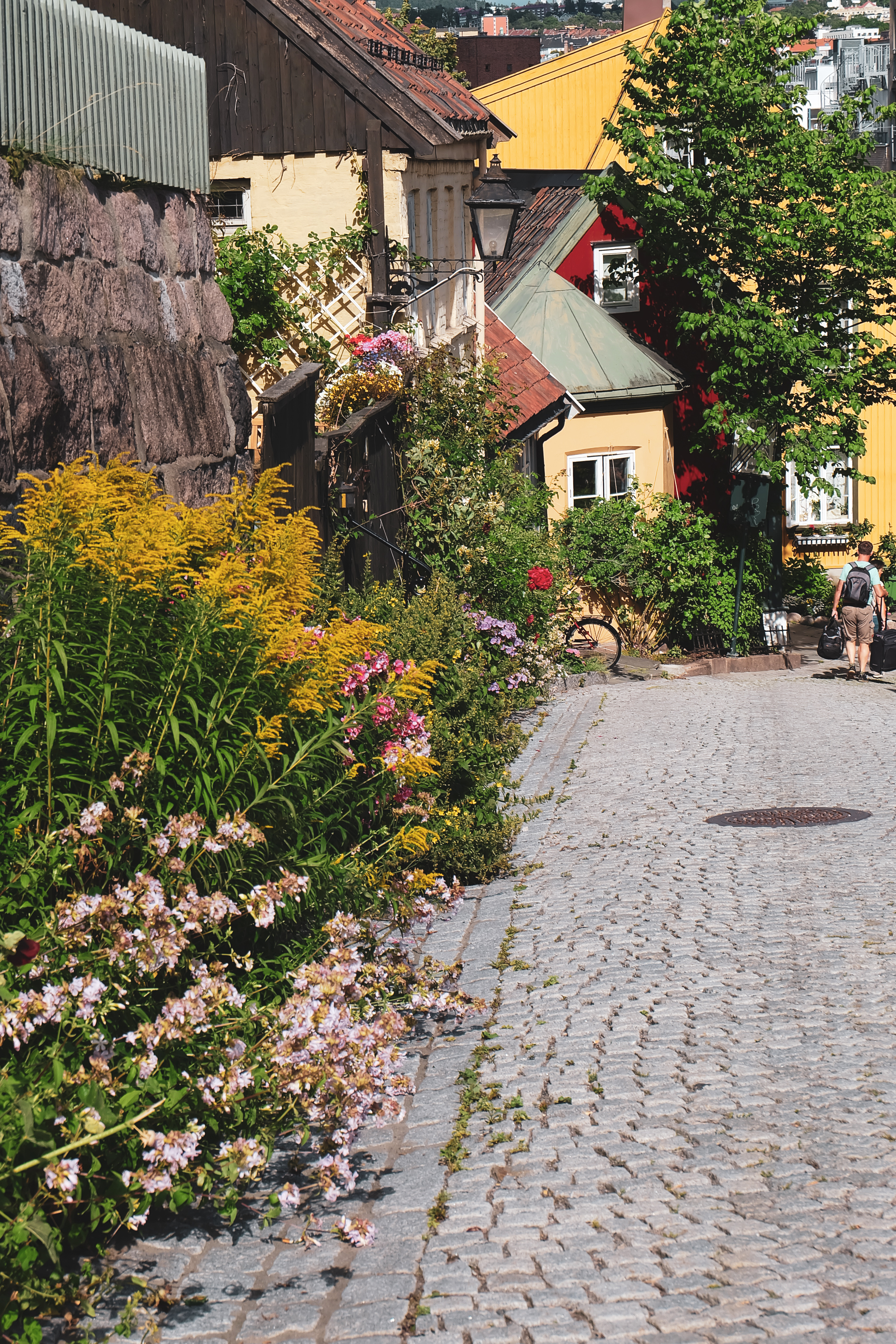
We walked the long way back to the tram stop and decided to head over to the other side of the city where the tourist information woman had told us we could find Damstredet, a street made up of old wooden houses.
It didn’t disappoint! The picturesque cobbles and colourful collection of flowers made it feel like we’d stepped back in time. The houses were all gorgeously unique and the surrounding area was super peaceful. It definitely didn’t feel like we were still in a capital city.

From Damstredet, we walked 15 minutes to the Christiania mini golf club. It’s a cute little mini golf course in the middle of a residential area and we quickly found that the Norwegian rules were a bit different and rather strict compared to our own.
Despite enjoying ourselves, the heavens opened and we experienced a downpour like no other which meant that once the skies had cleared, we had no choice but to go back to the hotel and change into something warmer and drier.
Our last day, and how we chose to spend it
Our final day in Oslo was a lot more relaxed. We’d worn ourselves out with the constant travelling and sightseeing so we decided to have a lazy breakfast at one of the many Espresso House’s in Scandinavia before climbing the roof of the Opera House.
A piece of architectural wonderment, the Opera House was built with a slanted roof that you can walk up and from the top you have an amazing view of Oslo, including the Barcode Buildings that line the train tracks.

From there, we wandered along the waterfront and found ourselves by Akershus Fortress. Free to enter, we explored the cobbled streets of the Fortress and took a break by the pond where live music events are hosted.


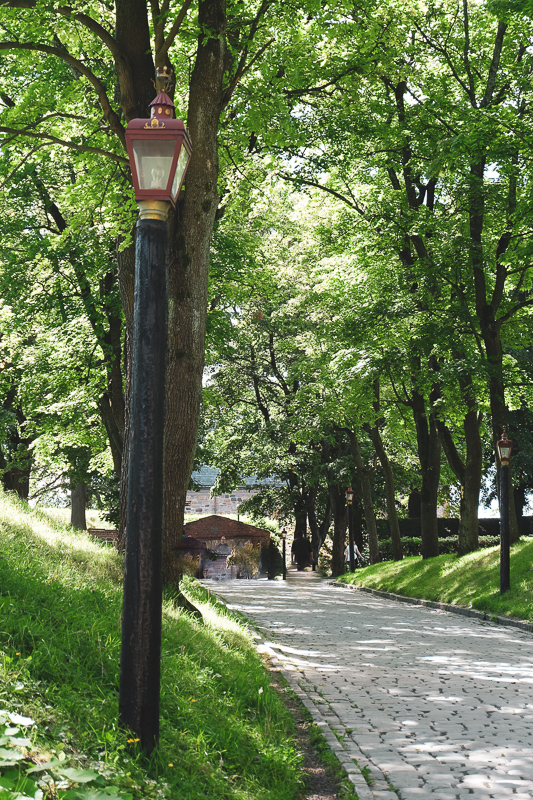
Climbing the Fortress walls, we could see across Pipervika bay where the sophisticated district of Aker Brygge boasts culture, fine dining and cocktails and then we used our travel cards to hop on the B2 boat to Langøyene. I loved how the the travel card meant we could use any form of public transport in Oslo, whether that was the metro, the tram or even the boats!

This was perhaps my favourite activity in Oslo. The views from the boat were incredible and felt very Norwegian. Some of the islands were empty, some purely for tourists while others had small cabin-like houses in bright colours. Langøyene was an ‘H’-shaped island with a nudist beach at one end and a campsite at the other. In between was a small bay where the majority of visitors congregated.

There wasn’t much on the island: a little chip shop that sold an assortment of ice creams and soft drinks and a public toilet. But it was the rural-ness of the island that was so enjoyable.

Our afternoon ended with a trip to the fine-dining New Delhi Indian where we splurged on a very expensive yet delicious curry before retiring back to the hotel and packing our bags for our flight home the next morning.
This was by far one of the most culturally rich holidays I’ve ever been on and we packed it full with so many amazing activities.
My top tips for holidaying in Scandinavia
DO: travel by train. It’s so cost-effective and really easy to get from one city to the next. The trains are pretty comfortable too and you really do save pennies this way – plus it’s an experience!
DO: visit the Holmenkollen ski jump in Oslo, it is definitely worth the hassle.
DON’T: waste money on public transport if you can help it. We didn’t need any public transport in Copenhagen because we were happy to do a little extra walking.
DO: get immersed in the culture. Sometimes I feel like we didn’t take enough of an advantage of the local traditions and way of life.
DO: plan in advance what you’re going to do. We spent a lot of time researching the attractions we wanted to visit and putting them in the best order possible to make the most of our time in each city.
DON’T: cram so much in! Our trip was such a whirlwind and I really feel like I missed out on a lot of activities, especially in Copenhagen because we only spent 2 nights there. If you’re budget allows, I would stretch it to at least 10 days.
DO: take lots of pictures! I have so many beautiful photos from our trip but it’s never enough and I wish I’d taken more. Photograph everything from the quaint little streets and the colourful buildings to the street vendors entertaining tourists.
DO: go island hopping in Oslo. Take a barbecue with you and enjoy the time out of the city.
DO: save your pennies and spend them at Tivoli Gardens in Copenhagen. Dedicate a whole day there if you can, you won’t be disappointed.
Touring Scandinavia, is it worth it?
I feel like a lot of people avoid travelling through Scandinavia due to cost. And don’t get me wrong, some bits were definitely pricier than I liked but travel was super affordable and accommodation costs were very reasonable. Food and drink were the most expensive, as a lot of activities were low cost or free.
So even if you’re a budget traveller, Scandinavia has a lot to offer!


